

For many nonprofits, accounting complexity does not happen all at once. It builds gradually. A new grant is awarded. A donor-restricted contribution comes in. A program expands. Reporting requests become more detailed. Over time, finance teams find themselves managing layers of requirements that their original accounting structure was never designed to handle.
This is often where the limits of a traditional chart of accounts start to show.
A nonprofit chart of accounts should provide clarity and support accurate reporting. But when every grant, fund, program, or location requires a new account combination, the structure can quickly become difficult to manage. Instead of simplifying reporting, it can create confusion, inconsistencies, and unnecessary manual work.
Sage Intacct dimensions offer a more flexible approach. Rather than building every reporting need into the account number, finance teams can tag transactions with key details like fund, grant, program, or location. This allows organizations to capture the information they need without overcomplicating the chart of accounts.
Why a Traditional Nonprofit Chart of Accounts Fall Short
Nonprofit financial data often needs to serve multiple audiences at once. A single expense may need to be reported in financial statements, grant reports, program budgets, and board reports—each from a slightly different perspective.
To manage this, organizations often expand their chart of accounts by adding segments or creating more account codes. Over time, this leads to:
- Too many account combinations
- Inconsistent coding practices
- Heavy reliance on spreadsheets for reporting
- Difficulty tracking restricted funds across programs
- Delays in grant and board reporting
When the structure becomes too rigid, even routine reporting can take longer than it should. Finance teams spend more time reconciling data than analyzing it, which can impact both efficiency and decision-making.
What Are Sage Intacct Dimensions?
Dimensions are attributes that can be assigned to transactions to provide additional context. Instead of relying solely on account numbers, organizations can tag each transaction with meaningful details such as:
- Fund
- Grant
- Program
- Department
- Location
- Project
This allows nonprofits to maintain a cleaner chart of accounts while still capturing the level of detail required for reporting.
For example, rather than creating separate expense accounts for every grant and program combination, a nonprofit can record a single expense account and tag it with the appropriate grant, program, and location. That same transaction can then be reported in multiple ways depending on the need.
Dimensions do not replace core accounting records or GAAP-compliant financial statements. Instead, they enhance the data, making it easier to generate both standard financials and detailed operational reports from the same source.
Improving Grant Reporting
Grant reporting is one of the most practical applications of dimensional accounting. Funders often require detailed insight into how funds are spent, how actual results compare to budgets, and whether expenses meet allowable guidelines.
Without a structured approach, finance teams may need to reconstruct this information manually at the end of the reporting period.
With dimensions, grant activity can be tracked in real time. By tagging transactions to the appropriate grant, organizations can:
- Monitor budget-to-actual performance
- Prepare grant-specific reports more efficiently
- Support grant reimbursement requests with clearly documented expenditures
- Identify overspending or underspending earlier
This reduces the need for last-minute data gathering and allows leadership to address issues before reporting deadlines.
Strengthening Fund and Restriction Tracking
Restricted funds require clear and accurate tracking. Donors and funders expect transparency around how their contributions are used, and organizations need to demonstrate compliance with those restrictions.
When this information is managed outside the accounting system or buried in complex account structures, reporting can become unreliable.
Dimensions allow nonprofits to consistently categorize transactions by fund and other reporting dimensions, making it easier to monitor donor-restricted activity and prepare accurate financial and grant reports.
For leadership, this distinction is important. An organization may appear financially stable overall while still having limited unrestricted resources available for operations. Dimensional reporting helps bring that clarity into focus.
Better Insight Across Programs and Operations
Many nonprofit leaders need visibility beyond organization-wide financials. Understanding performance by program, department, or location is critical for planning and sustainability.
Without dimensions, this level of insight often requires extensive spreadsheet work or an overly complex chart of accounts.
With dimensions, finance teams can generate reports that answer key operational questions:
- Which programs are over or under budget?
- How are resources allocated across locations?
- Are costs aligned with funding sources?
- Where are additional resources needed?
When financial data is easier to access and analyze, leadership can make more informed decisions about staffing, program growth, and long-term strategy.
Reducing Dependence on Spreadsheets
Spreadsheets will always have a role in financial management, but they should not be the foundation of reporting. Heavy reliance on spreadsheets can lead to version control issues, formula errors, and limited audit trails.
Dimensions help shift more of that reporting structure into the accounting system itself. By capturing the right details at the transaction level, finance teams can reduce manual data manipulation and generate reports directly from the system.
Because dimensions are attached to a single transaction, the same financial data can be analyzed from multiple perspectives without creating duplicate entries or maintaining separate reporting spreadsheets. This gives finance teams greater reporting flexibility while preserving a single, consistent source of financial data.
This improves both efficiency and accuracy while allowing more time for analysis.
Supporting Audit Readiness
Clean, well-organized financial data plays a key role in a smooth audit process. When transactions are consistently categorized, it is easier to provide supporting documentation and respond to auditor requests.
Dimensions support audit readiness by organizing activity by fund, grant, program, department, and location from the start. This makes it easier to trace transactions, prepare schedules, and identify unusual activity.
For nonprofits subject to grant compliance requirements or Single Audits, this level of structure becomes even more valuable.
A More Flexible Foundation for Nonprofit Reporting
Sage Intacct dimensions provide a more adaptable way to manage nonprofit financial data. Instead of expanding the chart of accounts to meet every reporting need, organizations can use dimensions to capture detail while keeping their structure manageable.
The result is more efficient reporting, improved visibility, and stronger support for decision-making.
At JFW Accounting Services, we work with nonprofits to evaluate whether their current systems are truly supporting their reporting needs. If your organization is spending too much time managing spreadsheets, struggling with grant tracking, or dealing with an overcomplicated chart of accounts, it may be time to consider a more flexible approach. Schedule a discovery call with JFW Accounting Services today to see how Sage Intacct dimensions can transform your financial visibility.
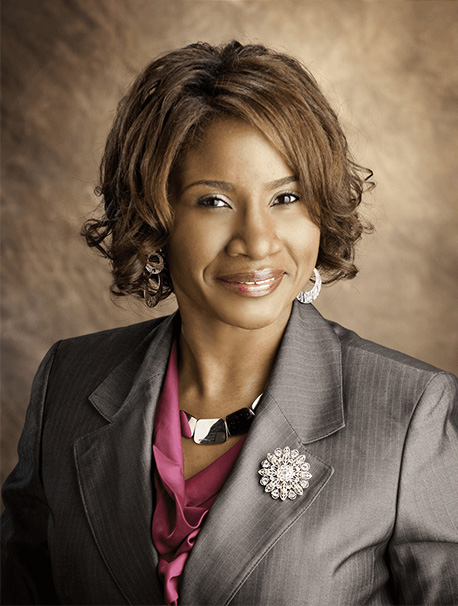
Jo-Anne Williams Barnes, is a Certified Public Accountant (CPA) and Chartered Global Management Accountant (CGMA) holding a Master’s of Science in Accounting (MSA) and a Master’s in Business Administration (MBA). Additionally, she holds a Bachelor of Science (BS) in Accounting from the University of Baltimore and is a seasoned accounting professional with several years of experience in the field of managing financial records for non-profits, small, medium, and large businesses. Jo-Anne is a certified Sage Intacct Accounting and Implementation Specialist, a certified QuickBooks ProAdvisor, an AICPA Not-for-Profit Certificate II holder, and Standard for Excellence Licensed Consultant. Additionally, Jo-Anne is a member of American Institute of Certified Public Accountant (AICPA), Maryland Association of Certified Public Accountants (MACPA), and Greater Washington Society of Certified Public Accountants (GWSCPA) where she continues to keep abreast on the latest industry trends and changes.