Bookkeeping
We manage accounts receivable, accounts payable, bank reconciliation, payroll processing and other essential daily financial transactions.
Most people think of accounting as a back-office function. For nonprofits, that assumption is a liability.
A business tracks money to measure profit. A nonprofit tracks money to prove purpose. Those are fundamentally different goals, and they require a fundamentally different system. That system is fund accounting, and understanding it is one of the most important things a nonprofit leader can do.
The Nuts and Bolts of Fund Accounting
What is fund accounting? At its core, it is a method of tracking money based on where it came from and what it is allowed to do, not just how much came in and went out.
Each pool of money, called a fund, carries its own rules. Restricted funds can only be spent on what the donor specified. Unrestricted funds give the organization flexibility. Endowments are held and invested separately. Fund accounting keeps all of it organized and protected.
JFW Accounting Services was built to serve organizations that depend on this kind of financial discipline. Our accounting team specializes in building accounting systems that protect tax-exempt status, satisfy auditors, and give leadership the clarity they need to lead well.
Imagine a donor gives $25,000 specifically for student scholarships. She cares about that program. She wants to see it funded. Now imagine her donation gets absorbed into the general operating budget because the organization needed to cover a utility bill. She never finds out, but the funds are gone.
That is a stewardship failure. It may also be a legal one.
Fund accounting prevents this by creating a virtual firewall between every pool of money. Scholarship funds stay in the scholarship fund. Grant dollars restricted to program delivery cannot drift into administrative expenses. Each fund is tracked separately, with its own balance and its own allowable uses.
Think of it like the difference between one checking account for everything versus separate accounts for rent, groceries, and savings. When everything runs through a single account, it is easy for money to disappear in ways that are hard to explain later. Separate accounts make the picture clear.
Stewardship in nonprofit accounting is not just a financial practice. It is a cultural commitment. Organizations that take it seriously attract larger gifts. Major donors and foundations conduct due diligence before committing significant dollars. Clean fund tracking, accurate restriction management, and transparent reporting all signal that an organization can be trusted with a major investment.
Donors today are more financially sophisticated than they were a generation ago. Individual major donors, community foundations, and government agencies all want evidence that their money did what it was supposed to do. An impact story is compelling. Financial proof is what builds long-term trust.
Fund accounting makes that proof available quickly. When a grant funder requests a financial report, a well-structured fund accounting system can produce one that matches the grant budget line by line. There is no scrambling, no re-categorizing transactions after the fact, and no guessing about whether expenditures were allowable.
The alternative is worse than inefficiency. Accidental misuse of restricted funds, where money is spent on the wrong program or period, has ended careers and organizations. It is rarely intentional. It usually starts with a manual spreadsheet, a staff transition, or a cash-flow crunch. Proper fund accounting eliminates the conditions that enable those mistakes.
A nonprofit’s mission is long-term. The financial systems that support it need to be too.
Endowments and restricted reserves require separate tracking from operating cash. If those funds are not isolated, there is a real risk of spending tomorrow’s stability on today’s expenses. Fund accounting builds that separation into the structure of the books, not just a policy document that staff may or may not follow.
The annual audit is where financial discipline either shows or doesn’t. Organizations that maintain clear fund structures throughout the year arrive at audit time with documentation in order and accounts that reconcile. Auditors find what they expect to find. Findings are minimal. The process moves quickly.
Organizations that rely on manual tracking or informal systems spend weeks before the audit reconstructing records, answering auditor questions, and explaining variances. That is expensive and stressful, and it creates doubt about the organization’s internal controls.
Early-stage nonprofits often start with spreadsheets. That is understandable. But spreadsheets do not scale and do not protect the integrity of funds in the way an organization’s stakeholders expect.
As staff changes, as grants multiply, and as donor restrictions grow more varied, a spreadsheet-based system requires more manual attention to maintain. One formula error or one missed entry can distort the entire picture.
Platforms like Sage Intacct change that. With Sage Intacct, fund structures are native to the system, grant tracking is automated, restriction balances update in real time, and reports that used to take days to compile take minutes.
JFW Accounting Services handles the setup, configuration, and ongoing management of these systems so your leadership team does not have to become accounting experts. Our team builds the fund structure, maintains the records, and produces the reports your board, funders, and auditors need. You focus on the mission. We make sure the financial foundation holds.
If your nonprofit is ready for accounting systems that reflect your values, contact us to schedule a discovery call.
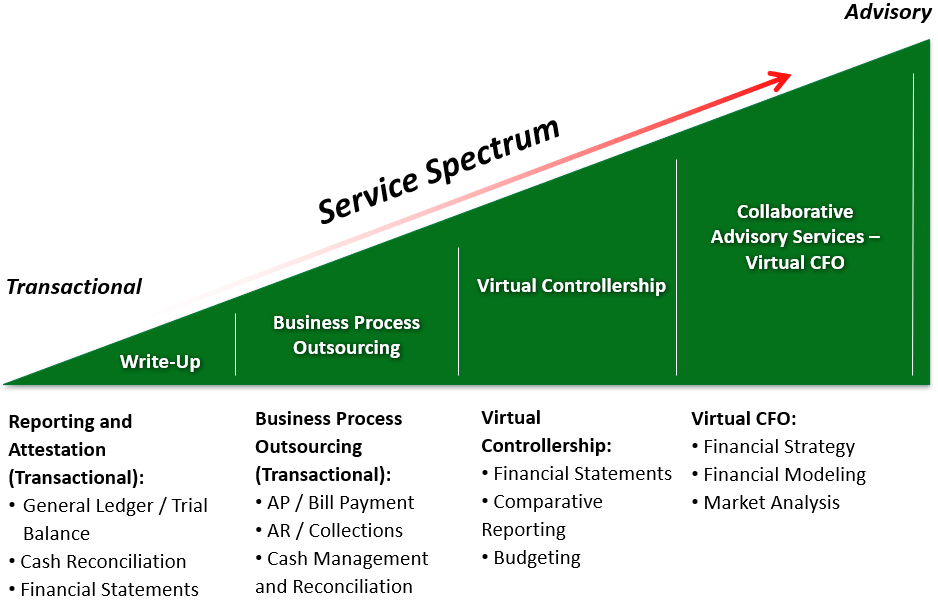



We offer the following services: