

Nonprofit leaders are often asked to make important decisions quickly. Should a program expand? Is grant spending on track? Are we staying within budget? Do we have enough unrestricted cash to support operations?
These decisions depend on timely, accurate financial data. Yet for many nonprofits, reporting still happens after the fact. Information is pulled after month-end, adjusted in spreadsheets, and reviewed days or weeks after activity has already shifted.
By the time leadership sees the numbers, the window to act early may have passed.
Sage Intacct dashboards offer a more immediate view. Instead of waiting for static reports, finance teams can monitor key financial data throughout the month. For nonprofits managing grants, restricted funds, and multiple programs, that visibility can support stronger decisions and better accountability.
Why Delayed Reporting Creates Risk
Delayed reporting is more than an inconvenience. It can create real financial and compliance challenges.
Nonprofits operate with multiple stakeholders relying on the numbers. Boards need accurate reporting for oversight. Funders require timely grant updates. Donors expect transparency. Leadership needs to understand whether programs are financially sustainable.
When reporting lags, small issues can grow unnoticed. A grant may be overspent before anyone catches it. A program may run over budget for months. Cash flow concerns may be masked by restricted funds. This lag places a heavy operational burden on the finance team, leaving them to react to historical discrepancies rather than steering the organization proactively. Board reports may be rushed together with limited time for review.
In many cases, the data exists, but it is not easy to access or analyze quickly. It may be spread across accounting systems, spreadsheets, and other tools, creating more work for finance teams and less clarity for decision-makers.
Nonprofit reporting should not just explain what happened. It should help leaders understand what is happening now.
How Sage Intacct Dashboards Improve Visibility
Sage Intacct dashboards provide a centralized, real-time view of financial activity. Using Sage Intacct for nonprofits to centralize your accounting ecosystem means that instead of relying solely on delayed monthly reports, your organization can track key operational metrics in one place.
This might include budget vs. actuals, grant spending, fund balances, program expenses, cash activity, and revenue trends.
The goal is not to present more data, but to present the right data in a format that is easy to understand. Users can also drill down from summarized dashboard metrics into the underlying transactions, providing greater transparency and reducing the need to search through multiple reports.
A finance director may focus on grant spending and cash flow. An executive director may need a high-level view of overall performance. Program managers may need visibility into their specific budgets. Board members may need summarized insights that support oversight without unnecessary detail.
Dashboards help organize this information so each stakeholder can focus on what matters most.
Key Metrics Nonprofits Should Monitor
While dashboard design will vary by organization, most nonprofits benefit from tracking a core set of financial indicators.
Budget vs. Actuals
Monitoring budget performance helps identify variances early. Leadership can determine whether differences are timing-related, the result of coding or allocation issues, or indicative of broader operational or funding concerns.
Grant Activity
Dashboards can track award amounts, spending to date, remaining balances, and reporting timelines and remaining grant periods. This reduces last-minute scrambling and supports compliance.
Fund Balances and Restrictions
Clear visibility into restricted versus unrestricted funds helps organizations understand what resources are truly available for operations.
Program Performance
Tracking revenue and expenses by program helps evaluate sustainability and resource allocation across mission activities.
Cash Flow Indicators
Monitoring cash balances, receivables, and payables is especially important for organizations with reimbursement-based funding or uneven revenue cycles. This distinction is especially important when a significant portion of cash is associated with donor-restricted or grant-restricted resources.
Revenue Trends
Dashboards can highlight patterns in donations, grants, or other revenue sources, helping leadership anticipate changes and plan accordingly.
The Value of Role-Based Dashboards
Not everyone in a nonprofit needs the same level of financial detail. One of the strengths of Sage Intacct dashboards is the ability to create role-based views.
Finance teams need transaction-level visibility. Executives need insight into overall performance and risk. Program managers need data tied to their programs. Board members need clear, summarized reporting.
Well-designed dashboards strike a balance. They provide enough detail to support decisions without overwhelming the user. Specialized accounting firms for nonprofits configure these views so that a founder looking for a strategic outsourced CFO for nonprofits gets a vastly different level of analysis than a program coordinator tracking daily receipts.
For example, a program manager may only need to see whether their program is over budget. A board treasurer may need quick visibility into cash and fund balances. An executive director may need to understand overall financial health without waiting for custom reports.
This approach improves accountability by making financial information more accessible across the organization.
How Real-Time Reporting Supports Better Decisions
Real-time visibility does not replace month-end close or financial review processes. Those still matter. But it allows teams to identify issues earlier. The information available is only as current as the underlying accounting activity. Timely transaction entry, approvals, and reconciliations remain essential to producing meaningful dashboard insights.
If grant spending is trending too high, adjustments can be made before the deadline. If a department has unusual activity, it can be reviewed sooner. If cash flow is tightening, leadership can plan proactively.
More frequent visibility supports stronger financial oversight by helping management identify errors, unusual activity, or inconsistencies earlier in the accounting process. When financial data is reviewed regularly, errors and inconsistencies are more likely to be caught early.
It also improves communication. Financial discussions no longer need to wait for monthly reports. Teams can have ongoing conversations about budget performance, funding, and program activity.
Reducing Dependence on Spreadsheets
Many nonprofits rely heavily on spreadsheets because their systems cannot easily produce the reports they need. While spreadsheets are useful, they introduce risk when they become the primary reporting tool.
Manual processes can lead to errors, inconsistencies, and delays. They also take time away from higher-value analysis.
Sage Intacct dashboards reduce the need to export and rebuild reports. When data is structured correctly within the system, dashboards update automatically as new information is entered.
This allows finance teams to spend less time preparing reports and more time interpreting them.
A Clearer View of Financial Performance
For nonprofits, financial visibility is part of responsible stewardship. Leaders need accurate, timely information to manage resources effectively and maintain trust with stakeholders.
Sage Intacct dashboards provide a more immediate and practical way to monitor financial performance. With real-time reporting and role-based insights, organizations can improve decision-making and strengthen accountability.
If your team is spending more time assembling reports than using them, it may be worth taking a closer look at how your financial data is structured. The right reporting tools should give you clarity throughout the month, not just at the end of it.
At JFW Accounting Services, we help nonprofits design reporting environments that support real-time visibility and more informed decision-making. Contact us today if you are evaluating Sage Intacct or looking to get more value from your current system. We would be happy to walk you through what that could look like for your organization.
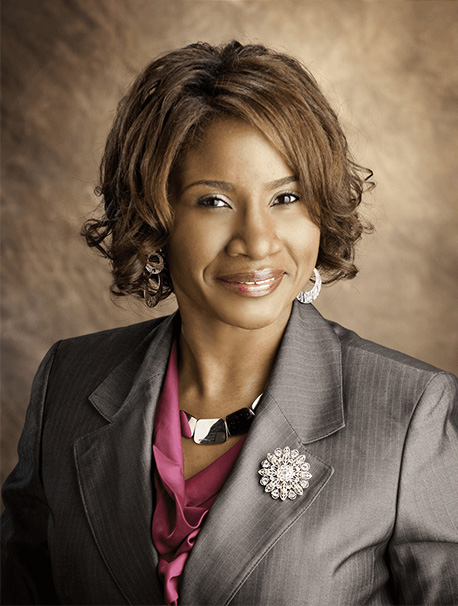
Jo-Anne Williams Barnes, is a Certified Public Accountant (CPA) and Chartered Global Management Accountant (CGMA) holding a Master’s of Science in Accounting (MSA) and a Master’s in Business Administration (MBA). Additionally, she holds a Bachelor of Science (BS) in Accounting from the University of Baltimore and is a seasoned accounting professional with several years of experience in the field of managing financial records for non-profits, small, medium, and large businesses. Jo-Anne is a certified Sage Intacct Accounting and Implementation Specialist, a certified QuickBooks ProAdvisor, an AICPA Not-for-Profit Certificate II holder, and Standard for Excellence Licensed Consultant. Additionally, Jo-Anne is a member of American Institute of Certified Public Accountant (AICPA), Maryland Association of Certified Public Accountants (MACPA), and Greater Washington Society of Certified Public Accountants (GWSCPA) where she continues to keep abreast on the latest industry trends and changes.