
Growth is a positive milestone for any nonprofit. New grants, expanded programs, additional staff, and increased donor support all reflect an organization making a greater impact.
But growth also brings greater financial complexity.
The accounting processes, reporting structures, and internal controls that worked for a smaller organization may no longer provide the visibility and oversight needed as operations expand. Without strengthening financial infrastructure alongside operational growth, finance teams often spend more time managing administrative work than supporting strategic decision-making.
Strong nonprofit financial management is about more than maintaining accurate books. It requires financial systems and processes that support accountability, compliance, operational efficiency, and long-term sustainability.
When Nonprofit Operational Growth Outpaces Financial Infrastructure
Financial challenges rarely appear overnight. Instead, they develop gradually as organizations become more complex.
A nonprofit that once managed a single grant may now oversee dozens of funding sources across multiple programs, departments, or locations. Boards expect more detailed reporting, funders require greater transparency, and leadership needs faster access to financial information.
Yet many organizations continue relying on accounting workflows designed years earlier.
Over time, finance teams create workarounds to compensate for system limitations. Additional spreadsheets are introduced, reports require manual adjustments, month-end close takes longer, and answering routine financial questions becomes increasingly difficult.
These are often signs that financial infrastructure has not kept pace with organizational growth.
Recognizing these warning signs early allows nonprofits to strengthen financial processes before they begin affecting operations.
Why Financial Reporting Becomes More Challenging
As nonprofits grow, reporting naturally becomes more detailed.
Leadership wants visibility into financial performance by grant, program, department, funding source, or location. Boards require deeper financial analysis, and grantors often request increasingly detailed reports.
If accounting systems and reporting processes are not designed to support this complexity, finance teams are forced to export data into spreadsheets, reconcile information from multiple systems, and manually rebuild reports each month.
What once required a few hours can quickly become a multi-day process.
Delayed reporting affects more than efficiency. When financial information arrives weeks after activity has occurred, leadership has fewer opportunities to identify emerging issues, adjust budgets, or respond proactively to changing circumstances.
Timely reporting allows organizations to make informed decisions while there is still time to influence outcomes.
Managing Multiple Grants Increases Compliance Risk
Diversifying funding through government agencies, foundations, and other grantors strengthens financial stability, but it also increases compliance responsibilities.
Each grant may have unique reporting deadlines, allowable costs, documentation requirements, indirect cost rules, and performance expectations.
Without consistent financial processes, organizations face increased risk of:
- Costs charged to the wrong grant
- Delayed reimbursement requests
- Missed reporting deadlines
- Inaccurate grant reporting
- Audit findings
- Difficulty demonstrating compliance
Strong financial management supports accurate grant tracking from the beginning rather than requiring activity to be reconstructed at the end of the reporting period.
Growing nonprofits must also evaluate whether awards represent contributions or exchange transactions, whether funding is conditional, and whether donor restrictions apply. These accounting decisions directly affect revenue recognition and financial reporting.
Internal Controls Become More Important as Organizations Grow
Growth often means financial responsibilities are shared across more employees, departments, and locations.
While delegation improves operational capacity, it also increases risk if internal controls do not evolve alongside the organization.
Approval workflows that once worked for a small team may no longer provide adequate oversight. Documentation practices can become inconsistent, purchasing may become decentralized, and manual journal entries may receive limited review.
Common warning signs include:
- Inconsistent approval procedures
- Inadequate segregation of duties
- Incomplete supporting documentation
- Manual journal entries with limited oversight
- Decentralized purchasing processes
Strengthening nonprofit internal controls helps improve financial accuracy, accountability, compliance, and audit readiness while supporting continued growth.
Why Spreadsheets Are a Risky Foundation for Nonprofit Reporting
Spreadsheets remain valuable for financial analysis, but they should not become the foundation of an organization’s reporting process.
Many nonprofits rely on increasingly complex spreadsheets to bridge gaps between accounting systems, grant reporting, budgeting, and board reporting.
Although these workarounds may solve immediate problems, they introduce new risks. Version control becomes difficult, formulas may be overwritten, data is entered multiple times, and reports require extensive review before they can be distributed.
Most importantly, finance professionals spend valuable time preparing information instead of analyzing it.
Financial reporting should support strategic conversations about organizational performance, sustainability, and future planning—not consume the majority of the finance team’s time.
The Value of Proactive Financial Planning
One of the most effective ways to support long-term growth is to strengthen financial management before problems emerge.
Rather than waiting for reporting delays, compliance issues, or operational bottlenecks, organizations should periodically evaluate whether their financial systems and processes continue to meet their needs.
Leadership should ask questions such as:
- Can we produce timely financial reports without extensive manual work?
- Are our internal controls appropriate for our current size?
- Do we have clear visibility into grant, program, and departmental performance?
- Can leadership easily access the financial information needed for decision-making?
- Are our accounting processes scalable as we continue to grow?
These conversations shift financial management from reactive problem-solving to proactive strategic planning.
Strong financial processes also support better budgeting, forecasting, cash flow management, and long-term organizational sustainability.
Building a Financial Foundation for Sustainable Growth
Growth is something every nonprofit strives to achieve, but sustainable growth requires more than expanded programs and increased funding.
It requires financial systems, reporting processes, and internal controls that evolve alongside the organization.
When financial infrastructure keeps pace with growth, leadership gains timely reporting, stronger compliance, improved governance, and greater confidence in decision-making.
Organizations that invest in nonprofit accounting services before challenges arise are often better positioned to manage uncertainty, respond to new opportunities, and continue advancing their mission.
Strengthen Your Nonprofit’s Financial Foundation with JFW Accounting Services
At JFW Accounting Services, we help nonprofits build the financial foundation needed for long-term success. From improving financial reporting and strengthening internal controls to providing outsourced accounting, Controller, and Fractional CFO services, our team helps organizations develop scalable financial processes that support sustainable growth.
If your finance team is spending more time managing spreadsheets than providing strategic financial insight, JFW Accounting Services can help you evaluate whether your financial infrastructure is keeping pace with your organization’s growth.
Learn more about JFW’s nonprofit accounting services or contact JFW Accounting Services to discuss how stronger financial systems can improve reporting, compliance, and long-term organizational success.
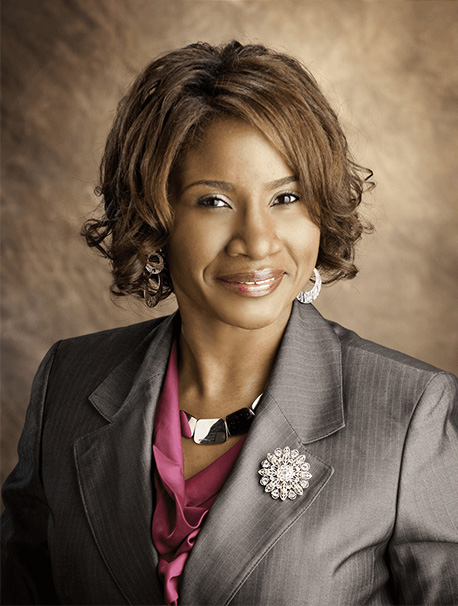
Jo-Anne Williams Barnes, is a Certified Public Accountant (CPA) and Chartered Global Management Accountant (CGMA) holding a Master’s of Science in Accounting (MSA) and a Master’s in Business Administration (MBA). Additionally, she holds a Bachelor of Science (BS) in Accounting from the University of Baltimore and is a seasoned accounting professional with several years of experience in the field of managing financial records for non-profits, small, medium, and large businesses. Jo-Anne is a certified Sage Intacct Accounting and Implementation Specialist, a certified QuickBooks ProAdvisor, an AICPA Not-for-Profit Certificate II holder, and Standard for Excellence Licensed Consultant. Additionally, Jo-Anne is a member of American Institute of Certified Public Accountant (AICPA), Maryland Association of Certified Public Accountants (MACPA), and Greater Washington Society of Certified Public Accountants (GWSCPA) where she continues to keep abreast on the latest industry trends and changes.