

Community foundations are responsible for managing charitable resources across a wide range of purposes. Donor-advised funds, scholarship funds, designated funds, agency funds, field-of-interest funds, and unrestricted resources may all operate within the same organization.
As assets and donor relationships grow, so does the complexity behind them.
Finance teams must accurately track fund balances, grants, investment activity, administrative fees, and restrictions while providing meaningful information to donors, boards, leadership, and auditors. Without scalable processes, every new fund can add another layer of administrative work.
Effective community foundation accounting requires more than processing transactions accurately. It requires a financial structure that provides transparency and appropriate oversight without creating unnecessary complexity.
For growing foundations, improving fund management often begins by evaluating how financial information is tracked, reviewed, and reported.
Why Fund Management Becomes More Complex as Foundations Grow
A community foundation may begin with a relatively manageable number of funds, but growth can quickly change the demands placed on the finance function.
Each fund may have a different purpose, spending policy, donor restriction, grantmaking activity, investment allocation, or administrative fee structure. Those individual activities must be tracked accurately while also rolling into organization-wide financial reporting.
Complexity increases further when information is maintained across accounting records, donor management systems, investment statements, grantmaking platforms, and spreadsheets.
Without consistent processes, finance teams can spend significant time reconciling information rather than analyzing it.
Strong community foundation financial management creates a repeatable structure for handling this complexity so growth does not automatically result in greater administrative burden.
Establish Consistent Fund Tracking Practices
Accurate fund-level information is fundamental to foundation financial management.
Whether managing donor-advised funds, scholarship funds, designated funds, or unrestricted resources, finance teams should have clearly defined procedures for recording and reviewing activity.
Those procedures should address key areas such as:
- Contributions and other additions to funds
- Grants and distributions
- Investment income, gains, and losses
- Administrative and investment fees
- Interfund activity
- Donor restrictions
- Available fund balances
Consistency is especially important when investment activity and administrative fees must be allocated across numerous funds.
Organizations should establish documented methodologies for these calculations and apply them consistently. Regular reconciliations between accounting records, investment statements, donor systems, and other relevant information can help identify discrepancies before they affect reporting.
The objective is to create processes that are repeatable and scalable rather than requiring staff to reconstruct fund activity each reporting period.
Eliminating Spreadsheet Risk with Automated Nonprofit Fund Accounting
Spreadsheets can be useful for analysis, but problems emerge when they become the primary mechanism for maintaining fund balances or producing financial reports.
As foundations grow, spreadsheets often become more complex. Multiple versions circulate, formulas require ongoing maintenance, and staff spend increasing amounts of time validating information before reports can be distributed.
This creates both inefficiency and risk.
Strong nonprofit fund accounting should allow financial information to flow from reliable accounting records into reporting processes with as little manual intervention as practical.
Foundations should evaluate which spreadsheets provide meaningful analysis and which exist primarily because existing financial processes cannot produce the information stakeholders need.
Reducing unnecessary manual work allows finance teams to spend more time reviewing financial performance and supporting organizational decision-making.
Strengthen Controls Around Fund Activity
Managing a large number of funds also requires a strong internal control environment.
As transaction volume increases, informal approval and review processes that worked for a smaller organization may become less effective.
Community foundations should establish clear responsibilities for initiating, approving, recording, and reviewing financial activity. Appropriate segregation of duties can help reduce the risk of errors while strengthening accountability.
Important controls may include:
- Defined approval authority for grants and disbursements
- Consistent documentation requirements
- Regular reconciliation of investment and fund activity
- Independent review of allocations and administrative fees
- Appropriate access controls for financial systems
- Review of unusual or significant transactions
- Periodic reconciliation of fund balances to supporting records
Controls should provide appropriate oversight without creating unnecessary bottlenecks. As foundations grow, these processes should be periodically reevaluated to ensure they remain appropriate for the organization’s size and complexity.
Make Financial Reporting More Useful
Community foundations serve several audiences, and each may require different financial information.
Donors may want information about activity within a particular fund. Board members need organization-wide financial information to fulfill their governance responsibilities. Leadership may require more detailed reporting on operating performance, liquidity, investment activity, or grantmaking.
Auditors require another level of documentation and financial support.
Trying to satisfy every stakeholder with the same report can create unnecessary complexity.
Effective foundation financial reporting starts by identifying what each audience needs and creating consistent reporting structures around those needs.
Standardized board reporting packages, recurring fund reports, documented reconciliation procedures, and clearly defined reporting schedules can reduce the need to recreate reports each period.
Reporting should also focus on information that supports decisions. Providing more data does not necessarily create greater transparency. Clear, consistent financial reporting is often more valuable than overwhelming stakeholders with unnecessary detail.
Know When Existing Processes Are No Longer Working
Financial processes that served a foundation well several years ago may not be appropriate today.
Leadership should periodically evaluate whether administrative demands are increasing faster than organizational growth.
Warning signs may include:
- Month-end close taking increasingly longer
- Frequent discrepancies between accounting and fund records
- Heavy dependence on spreadsheets
- Significant time spent preparing customized reports
- Difficulty reconciling investment activity
- Inconsistent administrative fee calculations
- Delayed donor or board reporting
- Key financial processes depending heavily on one employee
These issues often indicate that the underlying process, not simply staff capacity, needs attention.
Adding employees may temporarily address workload, but it does not necessarily solve inefficient workflows. Before increasing administrative resources, foundations should determine whether existing processes can be standardized, streamlined, or redesigned.
Building a Scalable Financial Infrastructure to Support Community Impact
Community foundations are entrusted with managing resources intended to create impact across organizations, causes, and generations.
As that responsibility grows, financial management processes must evolve alongside it.
Consistent fund tracking, thoughtful internal controls, streamlined reporting, and clearly documented procedures can help foundations manage increasing complexity without creating unnecessary administrative burden.
The goal is not simply greater efficiency. Strong financial processes give leadership and boards greater confidence in financial information while helping finance teams spend less time reconciling data and more time supporting the foundation’s long-term objectives.
Strengthen Community Foundation Accounting with JFW Accounting Services
At JFW Accounting Services, we help community foundations strengthen accounting processes, improve financial reporting, and build scalable financial structures that support continued growth.
Our outsourced accounting, Virtual Controller, and Fractional CFO services provide nonprofit organizations with experienced financial support across day-to-day accounting, reporting, internal controls, forecasting, and strategic financial management.
If your foundation’s growing number of funds is creating greater reporting complexity or administrative burden, JFW Accounting Services can help evaluate where financial processes can be strengthened.
Explore JFW’s nonprofit accounting services or contact JFW Accounting Services to discuss how your community foundation can improve fund management, strengthen reporting, and build financial processes designed to scale.
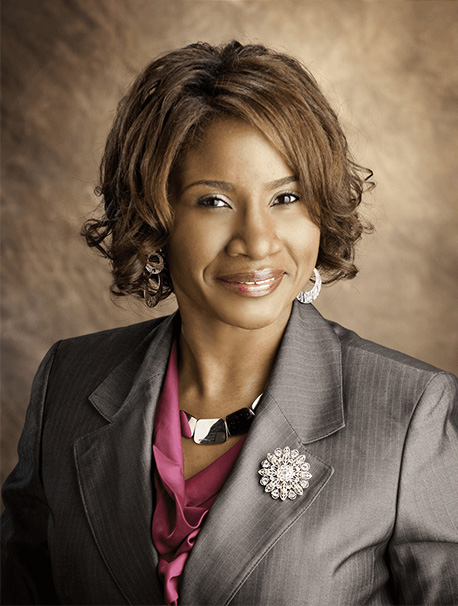
Jo-Anne Williams Barnes, is a Certified Public Accountant (CPA) and Chartered Global Management Accountant (CGMA) holding a Master’s of Science in Accounting (MSA) and a Master’s in Business Administration (MBA). Additionally, she holds a Bachelor of Science (BS) in Accounting from the University of Baltimore and is a seasoned accounting professional with several years of experience in the field of managing financial records for non-profits, small, medium, and large businesses. Jo-Anne is a certified Sage Intacct Accounting and Implementation Specialist, a certified QuickBooks ProAdvisor, an AICPA Not-for-Profit Certificate II holder, and Standard for Excellence Licensed Consultant. Additionally, Jo-Anne is a member of American Institute of Certified Public Accountant (AICPA), Maryland Association of Certified Public Accountants (MACPA), and Greater Washington Society of Certified Public Accountants (GWSCPA) where she continues to keep abreast on the latest industry trends and changes.