

Your board asks for updated financials. A funder requests grant reporting data. Your finance director needs numbers to inform next quarter’s strategic decisions. Each request lands on your desk with the same underlying question: Can we trust these numbers?
For nonprofits with revenue above $1M, financial clarity moves from a nice-to-have to a fundamental requirement for organizational health. But clarity means more than accurate bookkeeping or clean balance sheets. True financial clarity creates a foundation that protects your mission, strengthens your credibility, and enables confident decision-making at every level of your organization.
What Financial Clarity Actually Means
Financial clarity starts with accurate, timely data. Organizations that maintain strong financial practices position themselves better for funding opportunities and long-term sustainability. However, accuracy represents just the starting point.
Real clarity requires systems that track restricted and unrestricted funds properly, report grant expenditures correctly, and provide leadership with the information they need when they need it. This means establishing reporting structures that serve multiple stakeholders—from program managers tracking specific grants to executive directors presenting to boards to development teams planning fundraising strategies.
Many organizations operate with delayed or incomplete reports, creating uncertainty that ripples through the entire operation. When your finance team spends weeks closing the books or scrambling to pull together board reports, that delay affects everything from grant applications to strategic planning conversations. The organization moves forward without clear visibility into its true financial position.
The Cost of Financial Confusion
Unclear financial data creates real consequences. Missed grant compliance requirements can jeopardize current funding and future opportunities. Inaccurate reporting reflects poorly on your organization’s ability to manage resources effectively. Internal and external stakeholders begin to question whether the numbers tell the full story.
Beyond compliance risks, financial confusion limits your organization’s growth potential. Leadership teams struggle to make informed decisions about program expansion, staffing, or strategic investments when they lack confidence in the underlying data. Board members grow frustrated when they cannot get clear answers to straightforward questions about financial health.
The stress compounds during audit season, grant reporting cycles, or leadership transitions. Organizations find themselves in reactive mode, addressing immediate problems rather than building systems that prevent issues from arising in the first place.
How Clarity Protects Your Mission
When financial systems work properly, they create space for mission-focused work. Leadership teams spend less time questioning data accuracy and more time discussing program impact. Nonprofit accounting standards provide the framework, but implementation determines whether those standards support or hinder your operations.
Clear financials strengthen your case for funding. Grantors and major donors want to see that their contributions are tracked accurately and used as intended. Audit-ready financials demonstrate organizational discipline and build funder confidence. This credibility matters most when applying for new funding or expanding existing partnerships.
Financial clarity also supports internal decision-making. When program directors understand their budget constraints and spending patterns, they can plan more effectively. When development teams see real-time donation tracking, they can steward donors more personally. When executive leadership has access to forecasting tools and trend analysis, they can guide the organization proactively rather than reactively.
The right accounting systems, such as Sage Intacct, provide the infrastructure for this kind of visibility. But technology alone does not create clarity. Organizations need disciplined processes, trained staff, and partners who understand nonprofit-specific accounting requirements.
Building Clarity Into Your Operations
Creating financial clarity requires more than catching up on delayed reconciliations. Organizations need to establish reporting structures that work for their specific needs. A membership organization managing dues, events, and program revenue has different requirements than a fiscal sponsor overseeing multiple projects or a community service organization coordinating multi-grant programs.
Standard operating procedures (SOPs) preserve institutional knowledge and reduce risk during transitions. When finance processes are documented clearly, leadership changes or staff departures do not derail operations. The organization maintains continuity even when key people leave.
Training matters too. Finance staff and leadership need to understand not just how to run reports but how to interpret them and use financial data to inform decisions. This kind of financial literacy extends clarity beyond the finance department into program teams and board rooms.
Moving From Reactive to Proactive
Organizations often seek accounting support when they are already in crisis—books are months behind, an audit deadline looms, or a leadership transition has exposed weak systems. But the most effective financial operations are built proactively, before problems compound.
A proactive approach means regular reconciliations, consistent reporting schedules, and systems that scale with organizational growth. It means anticipating board questions before they are asked and preparing grant reports before deadlines become urgent. This kind of financial management frees up mental space and organizational capacity for mission-driven work.
For nonprofits navigating lean funding environments, this clarity becomes even more critical. Every dollar needs to work hard. Every funding decision needs solid data behind it. Organizations cannot afford to operate in uncertainty.
Partner With Expertise That Understands Your Work
Financial clarity protects your mission by building confidence—confidence from funders, confidence from your board, and confidence in your own decision-making. When you trust your numbers, you can focus on the work that matters most.
Contact us to discuss how we can help establish the financial clarity your organization needs. Our team provides specialized nonprofit accounting services, including Sage Intacct implementation, audit preparation, and ongoing financial management designed for mission-driven organizations.
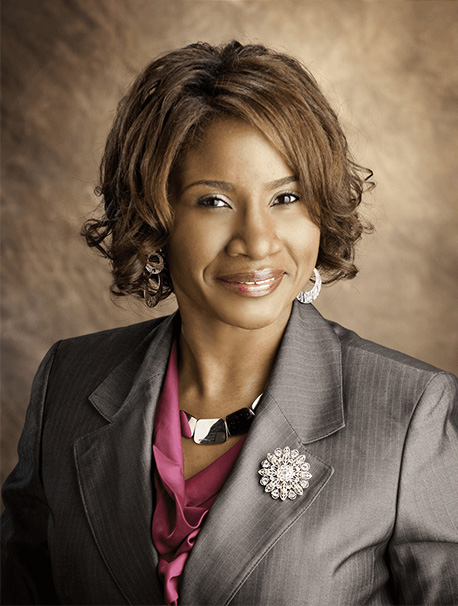
Jo-Anne Williams Barnes, is a Certified Public Accountant (CPA) and Chartered Global Management Accountant (CGMA) holding a Master’s of Science in Accounting (MSA) and a Master’s in Business Administration (MBA). Additionally, she holds a Bachelor of Science (BS) in Accounting from the University of Baltimore and is a seasoned accounting professional with several years of experience in the field of managing financial records for non-profits, small, medium, and large businesses. Jo-Anne is a certified Sage Intacct Accounting and Implementation Specialist, a certified QuickBooks ProAdvisor, an AICPA Not-for-Profit Certificate II holder, and Standard for Excellence Licensed Consultant. Additionally, Jo-Anne is a member of American Institute of Certified Public Accountant (AICPA), Maryland Association of Certified Public Accountants (MACPA), and Greater Washington Society of Certified Public Accountants (GWSCPA) where she continues to keep abreast on the latest industry trends and changes.