

The role of the nonprofit CFO has changed significantly.
Finance leaders are no longer expected to focus solely on accounting, compliance, and financial statements. Today’s nonprofit CFO must help leadership evaluate opportunities, anticipate financial challenges, strengthen governance, manage complex funding, and provide the insight necessary to support long-term organizational sustainability.
Yet many CFOs still spend much of their time managing tasks that leave little room for strategic leadership.
Reports must be rebuilt in spreadsheets. Data is reconciled across disconnected systems. Grant information requires manual tracking. Leadership requests financial information that takes hours, or days, to produce.
When a CFO spends more time assembling financial information than interpreting it, the organization may not be getting the full strategic value of its finance function.
Strong nonprofit financial management should give finance leaders the capacity and information they need to help guide the organization forward.
The Nonprofit CFO Role Has Evolved
Financial stewardship remains a fundamental responsibility of every nonprofit CFO, but the expectations surrounding the role have expanded.
Executive teams and boards increasingly look to finance leaders for guidance on questions such as:
- Can the organization afford to expand a program?
- How will changes in funding affect cash flow?
- Are grants and restricted funds performing according to plan?
- Where are the greatest financial risks?
- What resources will be required to support future growth?
Answering these questions requires more than accurate historical reporting. CFOs need timely financial information, effective forecasting tools, and the ability to analyze performance across programs, grants, departments, and funding sources.
When finance leaders are consumed by transactional accounting and manual reporting, there is less capacity for this higher-level work.
How Manual Spreadsheet Reporting Hinders Strategic Executive Leadership
Spreadsheets are valuable financial tools, but they can become a barrier when they serve as the foundation of the organization’s reporting process.
Many nonprofit finance teams spend significant time exporting information from accounting systems, updating formulas, reconciling multiple reports, and validating data before leadership can review it.
This creates two challenges.
First, it increases the administrative burden on finance. Second, it delays access to information.
By the time a report reaches leadership or the board, financial conditions may have changed. Opportunities to address budget variances, cash flow concerns, or grant spending issues early may already have passed.
Effective nonprofit financial reporting should provide decision-makers with relevant information while there is still time to act on it.
Signs Your Finance Function Has Outgrown Its Current Accounting Software
As nonprofits grow, financial complexity tends to increase alongside them.
Organizations may add new grants, programs, locations, funding sources, or reporting requirements without reconsidering whether their existing nonprofit accounting software can support that growth.
Warning signs often include:
- Month-end close taking increasingly longer
- Heavy reliance on spreadsheets for management reporting
- Difficulty reporting by grant, program, department, or location
- Manual data entry between accounting and operational systems
- Limited visibility into budget-to-actual performance
- Financial reports requiring extensive customization each month
- Leadership waiting on finance to answer routine financial questions
These issues do not necessarily indicate a problem with the finance team. Often, they signal that the organization’s financial infrastructure has not evolved with its needs.
Unlocking Strategic Visibility with Sage Intacct for Nonprofits
Modern cloud financial management platforms can help nonprofits reduce the administrative burden placed on finance teams.
Sage Intacct for nonprofits provides organizations with tools designed to centralize financial information, automate routine processes, and create more flexible reporting.
Dimensional accounting allows organizations to analyze financial activity across grants, programs, departments, locations, projects, and other relevant categories without continually expanding the chart of accounts.
Dashboards can also give authorized users greater visibility into recorded financial activity throughout the month. Final GAAP financial statements still require reconciliations, accruals, allocations, and other closing procedures, but leadership does not necessarily have to wait until month-end to begin understanding financial trends.
Depending on the organization’s configuration, integrations, and subscribed capabilities, Sage Intacct can also automate or streamline approval workflows, recurring transactions, allocations, consolidations, and portions of reconciliation processes.
Reducing manual work gives finance teams more capacity to focus on what the information means rather than simply producing it.
Technology Alone Does Not Create a Strategic Finance Function
Upgrading technology can improve efficiency, but implementing a new financial system does not automatically transform the finance department.
The system must be configured around the organization’s funding model, reporting needs, internal controls, accounting policies, and strategic priorities.
This is where experienced outsourced nonprofit accounting professionals can add significant value.
An experienced accounting partner can help organizations evaluate existing processes, identify inefficiencies, improve reporting structures, and determine how technology can better support leadership.
Outsourced accounting, Virtual Controller, and Fractional CFO services can also provide additional capacity and expertise when internal teams are stretched thin.
For some organizations, that means outsourcing transactional accounting so internal leadership can focus on strategy. For others, it may mean adding Controller or CFO-level guidance without hiring another full-time executive.
The objective is to align people, processes, and technology so each is being used at the appropriate level.
Giving CFOs More Time to Lead
The highest-value work of a nonprofit CFO rarely happens while reconciling spreadsheets or manually rebuilding reports.
It happens when finance leaders have time to evaluate trends, model future scenarios, strengthen cash flow planning, assess financial risk, and help leadership understand the financial implications of strategic decisions.
Creating that capacity requires a financial infrastructure that can support the organization as it grows.
Modern technology can reduce repetitive work and improve access to information. Strong accounting processes can improve consistency and accuracy. Experienced advisors can provide additional expertise and help leadership translate financial information into action.
Together, these resources allow the CFO function to become a stronger strategic partner to executive leadership and the board.
Build a Stronger Nonprofit Finance Function with JFW Accounting Services
At JFW Accounting Services, we help nonprofits build financial systems and processes that support both day-to-day operations and long-term strategy.
Our team combines nonprofit accounting expertise with Sage Intacct implementation and optimization services, outsourced accounting, Virtual Controller support, and Fractional CFO guidance. We work with organizations to improve financial reporting, strengthen processes, reduce manual work, and create greater visibility into financial performance.
If your nonprofit CFO or finance team is spending more time managing spreadsheets and assembling reports than forecasting, planning, and advising leadership, it may be time to evaluate whether your financial infrastructure is supporting the organization effectively.
Explore JFW’s nonprofit accounting and Sage Intacct services or contact JFW Accounting Services to discuss how your organization can build a more efficient, strategic finance function.
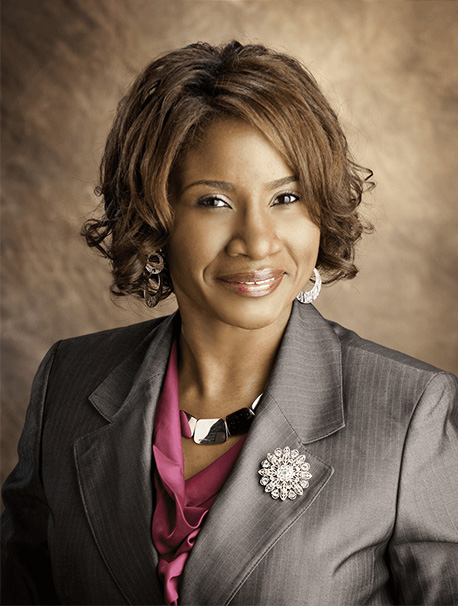
Jo-Anne Williams Barnes, is a Certified Public Accountant (CPA) and Chartered Global Management Accountant (CGMA) holding a Master’s of Science in Accounting (MSA) and a Master’s in Business Administration (MBA). Additionally, she holds a Bachelor of Science (BS) in Accounting from the University of Baltimore and is a seasoned accounting professional with several years of experience in the field of managing financial records for non-profits, small, medium, and large businesses. Jo-Anne is a certified Sage Intacct Accounting and Implementation Specialist, a certified QuickBooks ProAdvisor, an AICPA Not-for-Profit Certificate II holder, and Standard for Excellence Licensed Consultant. Additionally, Jo-Anne is a member of American Institute of Certified Public Accountant (AICPA), Maryland Association of Certified Public Accountants (MACPA), and Greater Washington Society of Certified Public Accountants (GWSCPA) where she continues to keep abreast on the latest industry trends and changes.