

Community foundations support a wide range of charitable priorities within the communities they serve. That often means managing donor-advised funds, scholarship funds, designated funds, agency funds, field-of-interest funds, and unrestricted resources, all within a single organization.
As the number of funds grows, so does the financial complexity.
Each fund may carry different restrictions, grantmaking activity, investment allocations, administrative fees, and reporting expectations. When accounting systems are not designed to manage that level of detail efficiently, finance teams often turn to spreadsheets to fill the gaps.
What begins as a practical workaround can eventually become a significant reporting burden.
For growing community foundations, the question is how to build a financial management structure that can scale while maintaining accuracy, transparency, and timely reporting.
Modern community foundation accounting software, including Sage Intacct, can help organizations move away from spreadsheet-dependent processes and toward a centralized approach to fund accounting and financial management.
Why Community Foundation Financial Complexity Expands as Funds Grow
Community foundations operate differently from many nonprofits because they may be responsible for hundreds, or even thousands, of individual funds.
Each fund must be tracked accurately while still rolling into the foundation’s overall financial statements. Finance teams may need visibility into contributions, grants, investment activity, administrative fees, available balances, and donor restrictions at both the individual fund and organization-wide levels.
As the foundation grows, leadership may also want to analyze financial information across programs, fund types, investment pools, or other categories.
When accounting platforms cannot easily provide this level of reporting, staff may export data into spreadsheets, maintain separate fund schedules, or manually combine information from accounting, donor management, investment, and grantmaking systems.
The result is more administrative work at exactly the point when leadership needs greater financial visibility.
The Risks of Spreadsheet-Driven Fund Accounting
Spreadsheets remain useful financial tools, but they become problematic when they serve as the primary system for tracking fund activity.
The more spreadsheets a foundation maintains, the more opportunities there are for inconsistencies.
A formula can be changed accidentally. A report may rely on an outdated workbook. Information may need to be entered into multiple systems. Staff may spend hours reconciling balances before reports can be distributed.
These risks become especially important when managing donor-advised fund accounting, where accurate fund balances and activity are essential to effective administration and reporting.
Spreadsheet dependence can also create key-person risk. When reporting relies heavily on one team member’s knowledge of complex workbooks, staffing changes can make already complicated processes even more difficult.
The goal is not to eliminate spreadsheets, but to use them for analysis rather than as the foundation’s underlying financial reporting system.
A More Centralized Approach with Sage Intacct
For community foundations evaluating their financial infrastructure, Sage Intacct provides a cloud-based platform designed to manage complex accounting and reporting requirements.
Sage Intacct for community foundations can help centralize financial information and reduce the need to maintain separate spreadsheets for every reporting dimension.
One of the platform’s key capabilities is dimensional accounting. Rather than expanding the chart of accounts every time the foundation needs another level of reporting, organizations can use configured dimensions to categorize financial activity.
Depending on the foundation’s structure and implementation, this can provide greater visibility across funds, programs, departments, locations, grants, and other relevant reporting categories.
The result is a more flexible fund accounting software environment that allows finance teams to analyze information without creating an increasingly complicated chart of accounts.
Improving Financial Visibility Through Timely Reporting
Community foundation leadership needs more than an annual financial statement to effectively oversee the organization.
Boards may want to understand overall financial performance, liquidity, investment activity, or grantmaking trends. Leadership may need insight into administrative revenue and operating expenses, while finance teams need detailed fund-level information.
Sage Intacct can provide dashboards and reports based on financial activity recorded in the system, giving authorized users more timely access to relevant information.
Final GAAP financial statements still require appropriate closing procedures, including reconciliations, investment entries, allocations, and other necessary adjustments. However, access to current financial information can help leadership identify trends and address questions earlier.
For community foundation financial management, that visibility can support stronger governance and more informed decision-making.
Eliminating Manual Data Entry with Cloud-Based Accounting Automation
Reporting is not the only area where community foundations can benefit from stronger financial technology.
Depending on the organization’s configuration, integrations, and subscribed capabilities, Sage Intacct can help automate or streamline approval workflows, recurring transactions, allocations, reconciliations, and reporting.
Integrations with other systems can also reduce the amount of information entered manually.
Reducing repetitive work improves efficiency and can reduce opportunities for data-entry errors. More importantly, automation gives finance professionals additional capacity to focus on analysis, forecasting, internal controls, and strategic financial planning.
Aligning Technology with Expert Nonprofit Accounting Strategy
Implementing Sage Intacct for nonprofits is not simply a software project.
The platform must be configured around the foundation’s fund structure, reporting requirements, accounting policies, internal controls, and long-term objectives.
Decisions made during implementation influence how effectively the organization can report on individual funds, allocate investment activity and administrative fees, manage workflows, and provide meaningful financial information to leadership.
This is why working with an experienced Sage Intacct nonprofit advisor can be valuable.
An accounting partner that understands both Sage Intacct and nonprofit financial management can help determine how technology should support broader financial processes, including reporting, automation, accounting workflows, and future growth.
Building a Financial Infrastructure That Can Scale
Community foundations are entrusted with managing charitable resources across generations of donors, organizations, and community priorities. Their financial infrastructure should support that responsibility.
As the number of funds increases, adding more spreadsheets is rarely a sustainable long-term strategy.
A modern financial management system can help foundations centralize fund accounting, reduce manual processes, improve reporting consistency, and provide leadership with greater financial visibility.
The objective is not simply to process transactions more efficiently. It is to give leadership, boards, and finance teams greater confidence in the information they use to make decisions.
Strengthen Community Foundation Financial Management with JFW Accounting Services
At JFW Accounting Services, we help nonprofit organizations strengthen the financial systems supporting their missions. Our team provides Sage Intacct implementation and optimization alongside outsourced accounting, Virtual Controller, and Fractional CFO services designed around nonprofit financial management.
For community foundations managing growing numbers of funds, the right combination of technology and accounting expertise can reduce administrative burden while creating a stronger foundation for reporting, oversight, and long-term growth.
If your finance team is spending more time maintaining spreadsheets than analyzing financial information, JFW can help you evaluate whether your accounting infrastructure is keeping pace.
Explore JFW’s Sage Intacct services or contact JFW Accounting Services to discuss how your community foundation can simplify fund management and strengthen financial visibility.
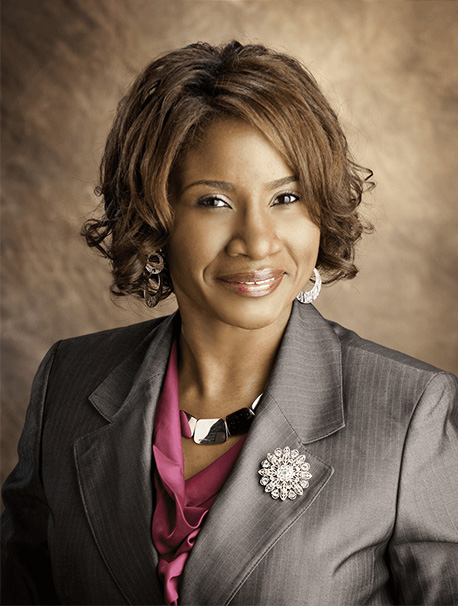
Jo-Anne Williams Barnes, is a Certified Public Accountant (CPA) and Chartered Global Management Accountant (CGMA) holding a Master’s of Science in Accounting (MSA) and a Master’s in Business Administration (MBA). Additionally, she holds a Bachelor of Science (BS) in Accounting from the University of Baltimore and is a seasoned accounting professional with several years of experience in the field of managing financial records for non-profits, small, medium, and large businesses. Jo-Anne is a certified Sage Intacct Accounting and Implementation Specialist, a certified QuickBooks ProAdvisor, an AICPA Not-for-Profit Certificate II holder, and Standard for Excellence Licensed Consultant. Additionally, Jo-Anne is a member of American Institute of Certified Public Accountant (AICPA), Maryland Association of Certified Public Accountants (MACPA), and Greater Washington Society of Certified Public Accountants (GWSCPA) where she continues to keep abreast on the latest industry trends and changes.